Why Data Centres Are Causing Water Worries — And What African Cities Can Learn
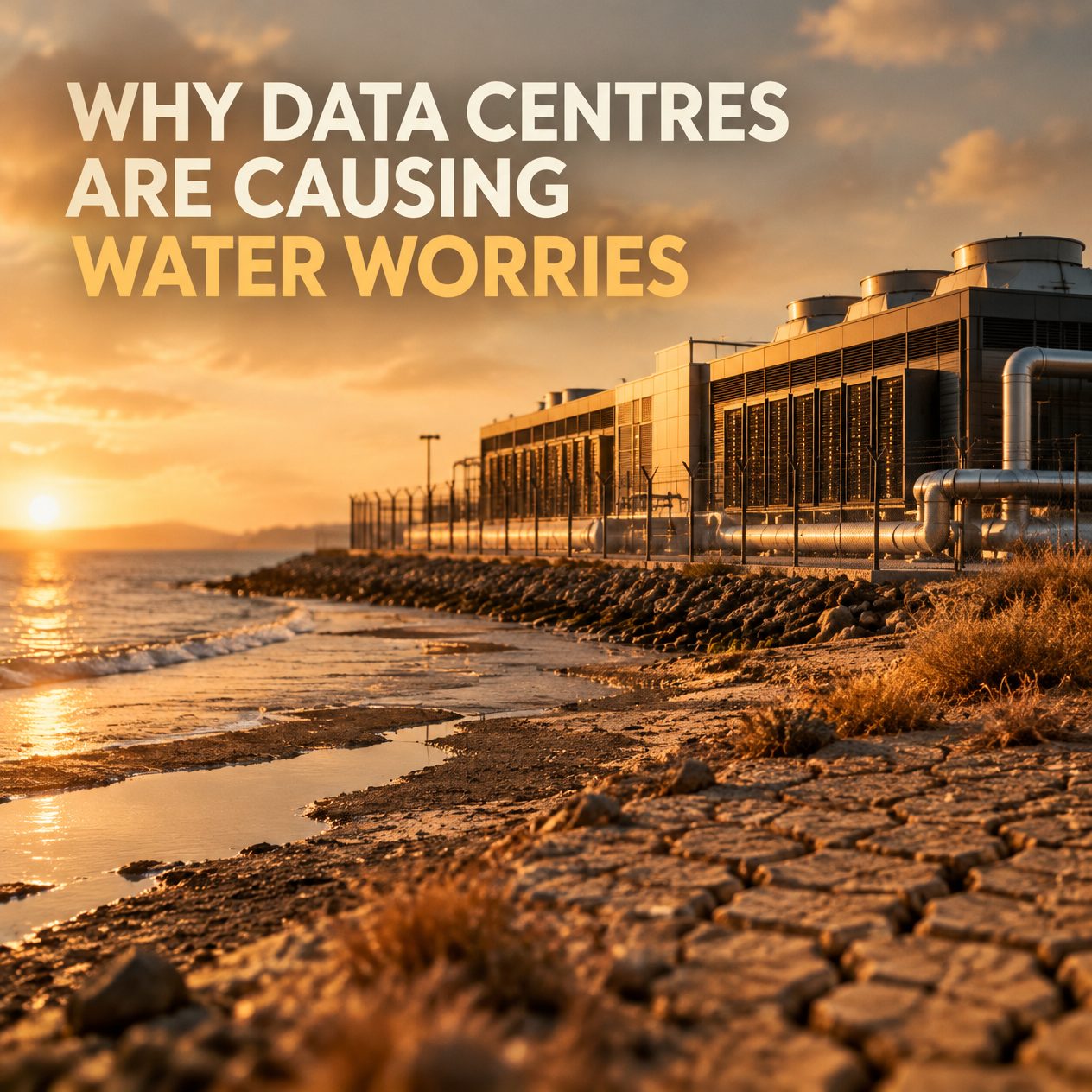
New reporting from AFP has revealed growing public anger in Indonesia and Malaysia, where communities are blaming large data centres for worsening water stress in their neighbourhoods. Residents report being unable to cook or shower because the massive facilities — which power everything from cloud storage to artificial intelligence — are consuming vast quantities of local water supplies. While this story is unfolding in Asia, it is a warning that African cities should heed now, before the continent's own data centre boom accelerates.
Why Data Centres Use So Much Water
Data centres are the physical backbone of the internet. Every time you stream a video, send a message, store a photo in the cloud, or ask a chatbot a question, your request travels to a warehouse full of servers — computers that run constantly and generate enormous amounts of heat.
To keep these servers from overheating and failing, data centres rely on cooling systems. The most common and efficient method is evaporative cooling, which uses water to absorb heat from the air. As water evaporates, it carries heat away, much like sweat cools the human body. This process is highly effective but extremely water-intensive.
A single large data centre can consume as much water as a small city. According to industry estimates, a typical hyperscale data centre can use between 1.8 million and 6.6 million litres of water per day — enough to supply thousands of households. The rise of artificial intelligence has made this problem worse: AI workloads require far more computing power than traditional tasks, meaning more servers, more heat, and more water.
Companies like Google, Microsoft, and Amazon have publicly acknowledged their water consumption. Google reported using over 20 billion litres of water across its global operations in a single year. Microsoft's water usage has also risen sharply as it expands its AI infrastructure.
Why This Matters Beyond Asia
The conflict between data centres and local water supplies is not limited to Southeast Asia. Similar tensions have emerged in:
The United States, where data centres in drought-prone states like Arizona and Virginia have drawn criticism from local communities.
Europe, where countries like Ireland and the Netherlands have seen data centre growth strain municipal water resources.
Latin America, where new facilities are being built in regions already facing water scarcity.
The core issue is that data centres are often built where land and electricity are cheap, without sufficient regard for local water availability. As the global demand for cloud computing and AI continues to explode, the water footprint of the digital economy is set to grow rapidly.
This is a global environmental justice issue. The communities that host data centres — often lower-income neighbourhoods — bear the cost of water scarcity, while the benefits of the technology are enjoyed worldwide.
What African Cities Can Learn Early
Africa is on the cusp of its own data centre boom. Countries like South Africa, Kenya, Nigeria, and Egypt are attracting major investments from global tech companies. While this brings economic opportunities, it also carries risks if water management is not prioritised from the start.
Here is what African cities and policymakers can learn:
1. Regulate water use before the boom. Cities should establish clear water-use limits for data centres and require environmental impact assessments before approving new facilities.
2. Encourage water-efficient cooling technologies. Data centres can use air cooling, liquid cooling with closed-loop systems, or even locate in cooler climates to reduce water dependency.
3. Require transparency. Tech companies should be mandated to publicly report their water consumption, just as they report carbon emissions.
4. Protect community water access. Local residents' right to water must take priority over industrial use, especially in water-stressed regions.
5. Plan for AI's water cost. As African countries develop their own AI capabilities, they must account for the additional water burden this will create.
The lesson from Indonesia and Malaysia is clear: if communities are not consulted and protected, the digital revolution will come at the cost of basic human needs. African cities have a window of opportunity to get this right — but that window is closing fast.
Sources
- citizen.digital/article/cant-cook-or-shower-indonesians-take-aim-at-data-centres-n393555
- sustainability.google/reports/environmental-report/
- www.microsoft.com/en-us/corporate-responsibility/sustainability/report
- www.iea.org/reports/data-centres-and-data-transmission-networks
- www.wri.org/insights/4-facts-about-water-stress
Version 1.0. 54gist stories are edited before publication and updated as facts change. Spotted an error? Tell our editors.