F1’s Rwanda Plan Gets Africa Talking as Fans Welcome Grand Prix Return
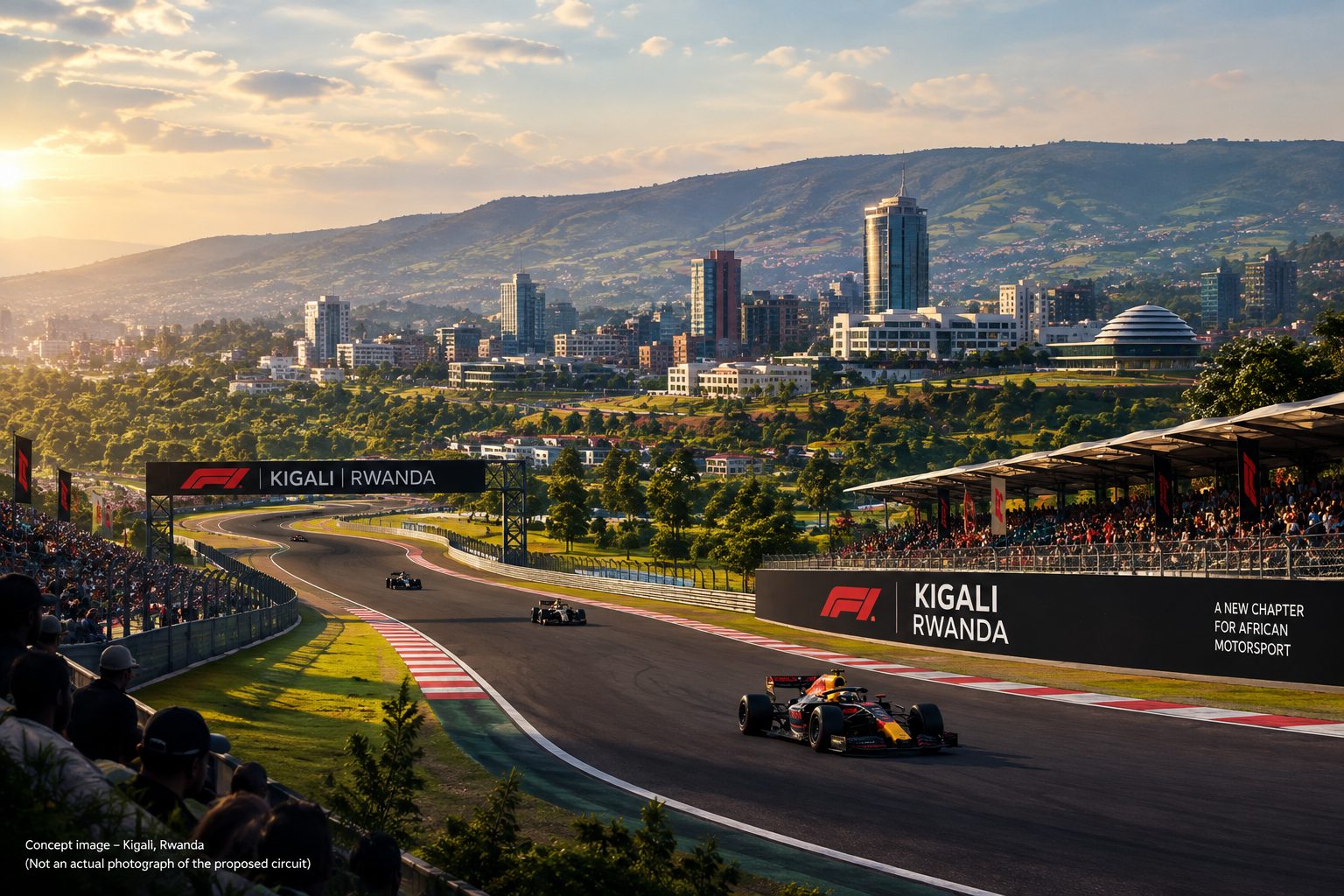
Formula 1 is set to return to Africa, and Rwanda is preparing to take the spotlight. The country has secured a 10-year agreement to host a Grand Prix in the early 2030s, marking a major moment for African motorsport after more than three decades without a Formula 1 race on the continent.
The announcement was made on October 13, 2026, in Kigali, with Rwandan President Paul Kagame and Formula 1 officials confirming the agreement. The last Formula 1 race held in Africa was the South African Grand Prix in 1993.
For many African motorsport fans, the news represents more than the arrival of another international sporting event. It is an opportunity for the continent to take a more visible place in a sport followed by millions around the world.
##Where Will the Race Take Place?
The proposed African Grand Prix will take place at a purpose-built circuit in Bugesera, approximately 40 kilometres south of Kigali, Rwanda’s capital. The site is close to a new international airport being developed in the area.
The circuit is expected to feature significant elevation changes, making use of Rwanda’s hilly landscape. Organisers envision a venue capable of hosting major events beyond Formula 1, potentially bringing activity to the area throughout the year.
However, the project still requires substantial development before the first race can take place. Although the agreement establishes the plan, an exact date for the inaugural Grand Prix has not yet been announced.
##Why Many Africans Are Excited
The announcement has revived conversations about Africa’s place in international motorsport. Seven-time world champion Lewis Hamilton has previously called for Formula 1 to return to the continent, arguing that African fans deserve the opportunity to experience the sport at home.
Rwanda’s hosting plans could create several opportunities.
Tourism and business: An international race could attract visitors, increase demand for hotels and restaurants, and give local businesses opportunities to serve spectators and international guests.
Jobs and skills: Circuit construction and race operations could create employment in engineering, hospitality, transport, event management and other industries. The long-term benefits will depend on how much work and training reach local communities.
National and continental pride: Hosting Formula 1 would place Rwanda before a global audience and give African fans a major event to look forward to. It could also inspire young people interested in motorsport, engineering and sports management.
Investment and infrastructure: The project could support wider investment in transport, tourism and event facilities. If managed effectively, some of these improvements could benefit residents beyond race weekend.
##Questions About Cost and Timing Remain
Despite the excitement, important questions remain. Hosting Formula 1 requires major investment in circuit construction, safety facilities, transport, security and event operations. The full cost of Rwanda’s project and how it will be financed remain important issues for public discussion.
People will also want to know when construction will be completed, when the first race will happen and how the project will be managed over the long term.
Another question is whether the economic benefits will justify the expenditure. Tourism and international attention can bring opportunities, but these outcomes are not automatic. The value of the project will depend on visitor spending, local employment, transparent financing and the effective use of the infrastructure created.
Rwanda’s plans have also drawn wider debate about the use of major sporting events to improve a country’s international image, making it important that discussions consider both the opportunities and the concerns.
##More Than a Sporting Event
Rwanda’s Formula 1 agreement has opened a new chapter for African motorsport. It offers the prospect of greater international visibility, new business opportunities and increased interest in racing across the continent.
But the real measure of success will go beyond the spectacle of fast cars and a packed grandstand. It will depend on whether the project delivers lasting benefits for Rwandans and creates opportunities for people across Africa.
For now, the early-2030s target gives organisers time to prepare. Fans will be watching to see whether Rwanda can turn its ambitious plans into a successful Grand Prix and establish a lasting place for Africa on the Formula 1 calendar.
Sources
Version 1.0. 54gist stories are edited before publication and updated as facts change. Spotted an error? Tell our editors.