ANC Losses Keep South Africa Talking: Voters Send a Strong Message after Historic Election Setback
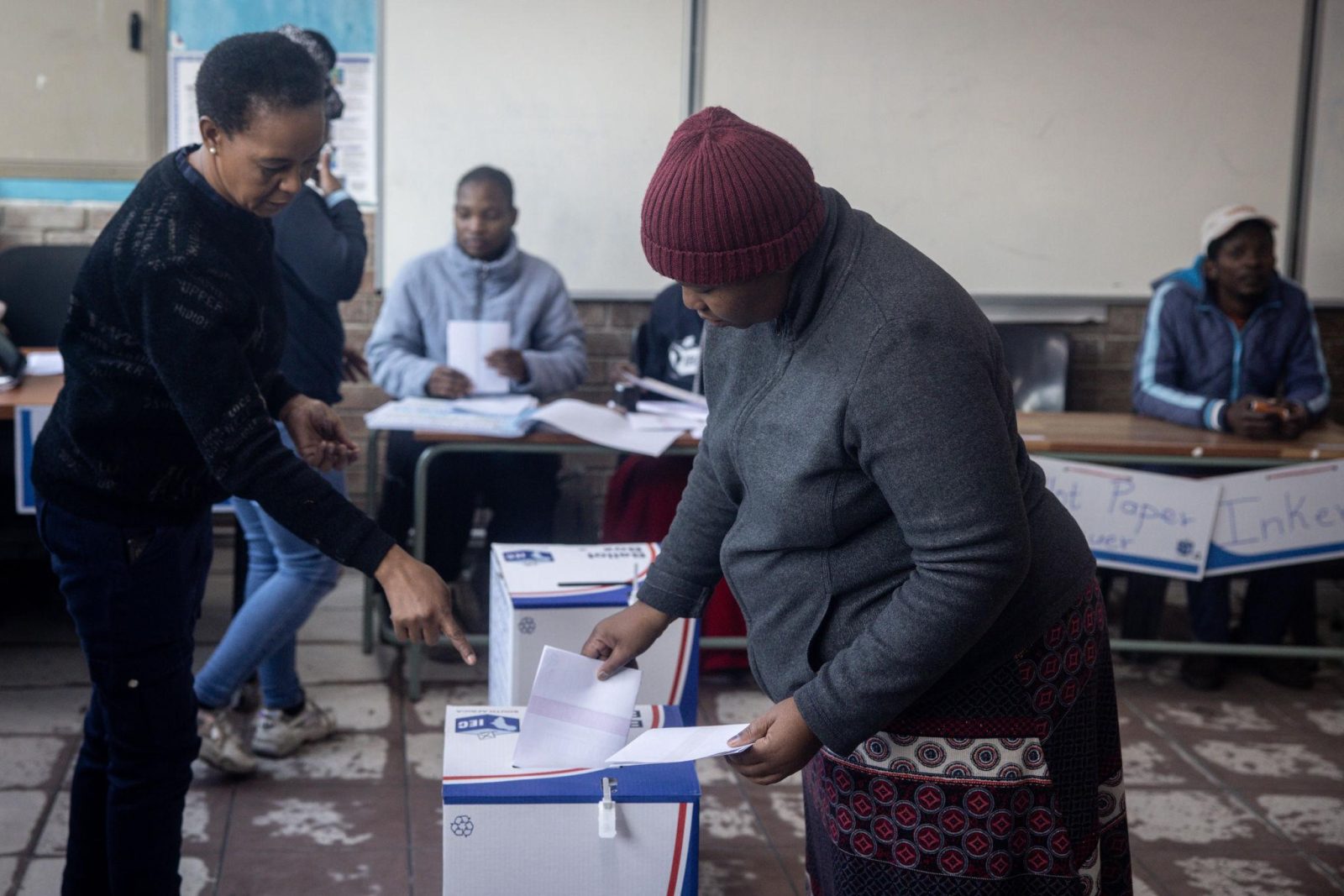
South Africa's political landscape is experiencing another major shift following a disappointing local election performance by the African National Congress (ANC), the party that led the country out of apartheid and dominated its politics for more than three decades.
The latest municipal election results have renewed conversations about the party's declining popularity, growing public dissatisfaction and the changing expectations of South African voters. For a political organization that once enjoyed overwhelming support across the country, the outcome represents a significant warning that its historical reputation is no longer enough to guarantee electoral success.
According to reports by the Associated Press (AP) and Reuters, the ANC received approximately 31% of the national vote in the November 4, 2026, local government elections, its weakest electoral performance since the introduction of democracy in 1994. The Democratic Alliance (DA) followed with approximately 25%, while former president Jacob Zuma's uMkhonto weSizwe (MK) Party secured around 10%.
The outcome has attracted attention beyond South Africa because it reflects a wider political question: what happens when voters begin to lose confidence in a party that has historically represented their hopes for freedom, equality and better living conditions?
For many South Africans, the answer is increasingly connected to everyday experiences. Access to clean water, reliable electricity, functioning roads, employment opportunities and effective municipal services have become important measures of political performance.
The election results suggest that voters are becoming increasingly willing to reconsider their political loyalties when they believe their communities are not receiving the services they deserve.
More importantly, the outcome could reshape local government arrangements, strengthen opposition parties and influence the country's political direction ahead of the 2029 national elections.
##Understanding the Election Results: What Happened to the ANC?##
To understand the significance of the ANC's losses, it is useful to examine the numbers and compare them with previous elections.
South Africa held local government elections on November 4, 2026. Unlike national elections, which determine the composition of Parliament and the country's national leadership, municipal elections determine which political parties control local councils responsible for managing cities, towns and communities.
These councils oversee important services such as water distribution, sanitation, waste collection, local roads, electricity distribution where municipalities are responsible, and other aspects of community development.
The latest results represent a significant decline for the ANC.
National vote share: 2021 versus 2026
Approximate national results, percentages
ANC 2021
45.6%
ANC 2026
31%
DA 2026
25%
MK Party 2026
10%
Sources: Reuters and AP reporting. Figures are rounded; the 2021 ANC result was approximately 45.6%.
The figures reveal three important developments.
First, the ANC's support fell from approximately 45.6% in the 2021 municipal elections to around 31% in 2026. This represents a decline of roughly 14.6 percentage points in five years.
Second, the DA secured approximately 25% of the vote, placing it behind the ANC nationally but strengthening its position in several important metropolitan areas.
Third, the MK Party, established by former president Jacob Zuma, secured approximately 10%, demonstrating that political competition is increasingly coming from different directions.
The ANC's decline did not happen overnight. In the 2016 local elections, the party secured approximately 54% of the national vote. It fell below 50% in 2021 and subsequently lost its parliamentary majority in the 2024 national elections, when it received approximately 40% of the vote.
The 2026 municipal outcome therefore continues a pattern of declining electoral support that has become increasingly difficult for the party to ignore.
For a party that won more than 60% of the vote in several national elections during its years of dominance, receiving approximately 31% in the latest municipal elections represents a remarkable political transformation.
It also means the ANC can no longer assume that its historical popularity will automatically translate into control of local governments.
##Why Are Voters Turning Away From the ANC?##
The decline in ANC support is connected to several problems that have affected ordinary South Africans for years. While political parties often focus on national achievements and campaign promises, many voters judge their leaders by what happens in their neighbourhoods.
For a family struggling to access clean water, a community dealing with overflowing rubbish or a small business affected by unreliable electricity, political history may become less important than the immediate need for effective services.
Several issues appear to have contributed to the ANC's disappointing performance.
1. Poor Water and Electricity Supply
One of the biggest sources of public frustration is the failure to provide reliable basic services.
Water shortages have affected communities in different parts of South Africa, including neighbourhoods in Johannesburg. Some residents have experienced prolonged interruptions, water rationing and concerns about the condition of ageing infrastructure.
Electricity supply has also remained a major concern. Although the country's power situation has experienced periods of improvement, electricity reliability and the cost of energy continue to affect households and businesses.
These problems have economic consequences. Small businesses depend on reliable electricity to operate, while households need consistent access to water for cooking, cleaning and other everyday activities.
The situation has created frustration among residents who believe local authorities should be doing more to maintain infrastructure and improve service delivery.
The Associated Press identified failures in water and electricity provision as major issues behind the ANC's electoral setback.
2. Corruption and Declining Public Trust
Corruption has been another major challenge for the ANC.
Over the years, the party has faced repeated allegations and investigations involving the misuse of public resources, questionable government contracts and failures of accountability.
One of the most significant episodes was the state capture scandal, which exposed how politically connected individuals and businesses allegedly influenced government institutions and state-owned enterprises for private benefit.
The revelations damaged public confidence in government and raised questions about the ability of political leaders to manage public resources responsibly.
For many voters, the problem is not simply that corruption exists. It is the belief that money intended for public development has not always been used to improve the lives of ordinary citizens.
This concern becomes particularly serious when communities continue to experience poor roads, inadequate sanitation, failing infrastructure and limited access to essential services.
The ANC's difficulties therefore extend beyond dissatisfaction with individual politicians. They involve a broader question about whether the party can rebuild public trust.
Reuters reported that corruption concerns and dissatisfaction with public services were central factors behind the latest electoral rejection.
3. Unemployment and Economic Pressure
Unemployment remains one of South Africa's most difficult social and economic challenges.
The country has struggled with high unemployment, particularly among young people entering the labor market. Many graduates and school leavers face difficulties finding stable employment, while others work in informal or temporary jobs without reliable income.
For younger voters, the promise of a better future is increasingly measured by practical opportunities.
They want access to education, employment, business opportunities and an economy that allows them to build independent lives.
When these opportunities remain limited, frustration with the government can increase.
Economic inequality also remains a serious concern. More than three decades after the end of apartheid, significant differences in income, wealth, housing and access to economic opportunities continue to shape South African society.
These challenges are complex and cannot be attributed to one political party or a single government decision. However, the ANC has governed nationally for most of the democratic era, making it a central target of public criticism over the country's economic direction.
4. Deteriorating Roads and Poor Municipal Management
Local government elections are particularly sensitive because they directly affect the communities where people live.
Unlike national elections, which focus on broader government policies, municipal elections give voters an opportunity to assess how effectively their local councils manage everyday services.
In several communities, residents have complained about potholes, damaged roads, broken streetlights, sewage problems and rubbish that remain uncollected.
Johannesburg has become an important example of these difficulties.
The city, which is South Africa's largest economic centre, has experienced repeated problems involving water supply, electricity infrastructure and municipal administration.
Its political leadership has also been unstable. The city changed mayors five times in four years following the previous local elections, reflecting the difficulties of managing fragile coalition arrangements.
These problems became central to the election campaign, with opposition politicians using visible infrastructure failures to question the ANC's ability to govern effectively.
For ordinary residents, the issue is straightforward: they expect the local government to maintain the services they depend on every day.
The inability to meet these expectations has contributed to the growing willingness to support alternative political parties.
5. Changing Political Loyalties and Growing Opposition
Another important factor is the changing relationship between South African voters and the political parties competing for their support.
For many years, the ANC benefited from its historical role in the struggle against apartheid. Its association with Nelson Mandela and the country's transition to democracy gave it considerable political legitimacy.
However, a younger generation of voters has different priorities.
Many young South Africans did not personally experience apartheid. Their political expectations are increasingly influenced by employment, education, economic opportunity, public services and government accountability.
This does not mean that the country's liberation history has become unimportant. Rather, it suggests that historical achievements alone may no longer be enough to maintain political support.
The opposition has also become more competitive.
The Democratic Alliance has strengthened its position in several metropolitan areas, while the MK Party has attracted support from voters dissatisfied with the ANC, particularly in KwaZulu-Natal.
Other political parties have also benefited from the growing fragmentation of the electorate.
The result is a more competitive political environment in which voters have several alternatives rather than one dominant political organization.
##The ANC's Losses in Major Cities: Why Johannesburg Matters##
One of the most important developments from the elections is the ANC's declining position in major metropolitan areas.
Johannesburg, Pretoria and Ekurhuleni are particularly significant because of their economic importance and large populations.
The ANC lost its position as the largest party to the DA in these three municipalities. In Johannesburg, the DA received approximately 35% of the vote, compared with around 20% for the ANC.
The outcome was particularly important because Johannesburg is one of the country's most economically influential cities and has experienced persistent complaints about municipal services.
In eThekwini, which includes Durban, the ANC finished third, behind the MK Party and the DA. The result highlighted the strength of Jacob Zuma's political movement in KwaZulu-Natal.
The DA also retained control of Cape Town, where it has maintained a strong political presence.
Across the country's eight metropolitan municipalities, the DA finished first in five, strengthening its position in the negotiations that will determine the next municipal governments.
These developments matter because metropolitan governments control important budgets and public infrastructure.
They also provide political parties with opportunities to demonstrate whether their campaign promises can translate into practical improvements.
However, winning the largest share of votes does not automatically guarantee control of a municipality. South Africa's local government system allows parties to form coalitions when no single party wins an outright majority.
That means the next stage of the political process will be just as important as the election itself.
##What Happens Next? Coalition Governments Could Shape South Africa's Future##
The ANC's reduced support has created a new political challenge: deciding who will govern municipalities where no party secured an outright majority.
In simple terms, a political party needs more than half the council seats to govern independently. When no party achieves that, two or more parties may negotiate an agreement to form a governing coalition.
This means smaller political parties could become extremely influential because their support may determine which larger party controls a municipal council.
For example, the DA's strong performance in Johannesburg gives it a stronger negotiating position, but it may still need support from other parties to establish a governing majority.
The ANC also has the opportunity to negotiate with smaller political organizations, potentially allowing it to retain some influence despite its reduced electoral support.
According to Reuters, coalition negotiations were expected to take place over the two weeks following the announcement of the results.
However, coalition governments can create their own challenges.
When political parties with different policies and priorities share power, disagreements over appointments, budgets and development plans can affect decision-making.
South Africa has already experienced difficulties with unstable municipal coalitions, including repeated changes in political leadership.
The real test will therefore be whether the parties can establish stable administrations that focus on delivering essential services rather than spending their time negotiating political positions.
For residents, the most important question is not necessarily which party becomes mayor. It is whether the new administration can improve water supply, repair roads, maintain electricity infrastructure and manage public finances responsibly.
##The ANC Must Rebuild Public Confidence##
For the ANC, the election results represent a serious warning about its future.
The party's leadership has acknowledged the disappointing outcome, with Secretary-General Fikile Mbalula describing the result as catastrophic.
He indicated that the party needed to listen to voters and examine what went wrong rather than dismiss the concerns being expressed through the ballot box.
This acknowledgement is important, but rebuilding public confidence will require more than statements.
The party must demonstrate that it can improve municipal administration, address corruption concerns, strengthen accountability and deliver measurable improvements in communities.
It must also address internal disagreements and questions about its future leadership.
President Cyril Ramaphosa is expected to step down as ANC party leader in December 2027, creating another important moment for the organization. The electoral setback could influence internal discussions about the party's leadership and direction.
The challenge is particularly significant because the ANC must prepare for the 2029 national elections while attempting to recover support lost across different parts of the country.
If the party fails to demonstrate meaningful improvements, the opposition could become even more competitive.
##Could the DA and MK Party Become Stronger?##
The election results also provide opportunities for opposition parties.
The DA has strengthened its position by securing approximately a quarter of the national vote and finishing ahead of the ANC in several important metropolitan areas.
Its challenge will be to demonstrate that it can translate electoral support into effective administration, particularly in municipalities where it will depend on coalition partners.
The MK Party has also emerged as an important political force.
Led by former president Jacob Zuma, the party attracted approximately 10% of the national vote and performed particularly strongly in KwaZulu-Natal.
Its performance demonstrates that dissatisfaction with the ANC is not necessarily translating into support for one opposition party. Instead, voters are distributing their support across different political organizations.
Other parties will also have opportunities to influence municipal decisions through coalition agreements.
The result is a political environment in which negotiations, cooperation and the ability to deliver results may become increasingly important.
##What the Results Mean for Africa##
South Africa remains one of Africa's most important economies and a major political and commercial centre on the continent.
Consequently, changes in its political environment attract attention beyond its borders.
The ANC's electoral decline is particularly significant because of the party's historical role in the struggle against apartheid and its association with Nelson Mandela.
For decades, the party represented a powerful example of political liberation and democratic transformation.
However, the latest results demonstrate that even parties with strong historical reputations must continue to earn the confidence of voters.
The development also offers an important lesson for other African governments: political legitimacy cannot depend entirely on historical achievements, campaign promises or longstanding party loyalty.
Citizens increasingly expect governments to demonstrate results through employment opportunities, reliable infrastructure, responsible public spending and effective public services.
South Africa's experience shows how local problems can develop into national political consequences when voters believe their concerns are not being addressed.
It also demonstrates the importance of competitive elections in allowing citizens to express dissatisfaction and demand better governance.
Version 1.0. 54gist stories are edited before publication and updated as facts change. Spotted an error? Tell our editors.