African job scam story in Cambodia shocks readers
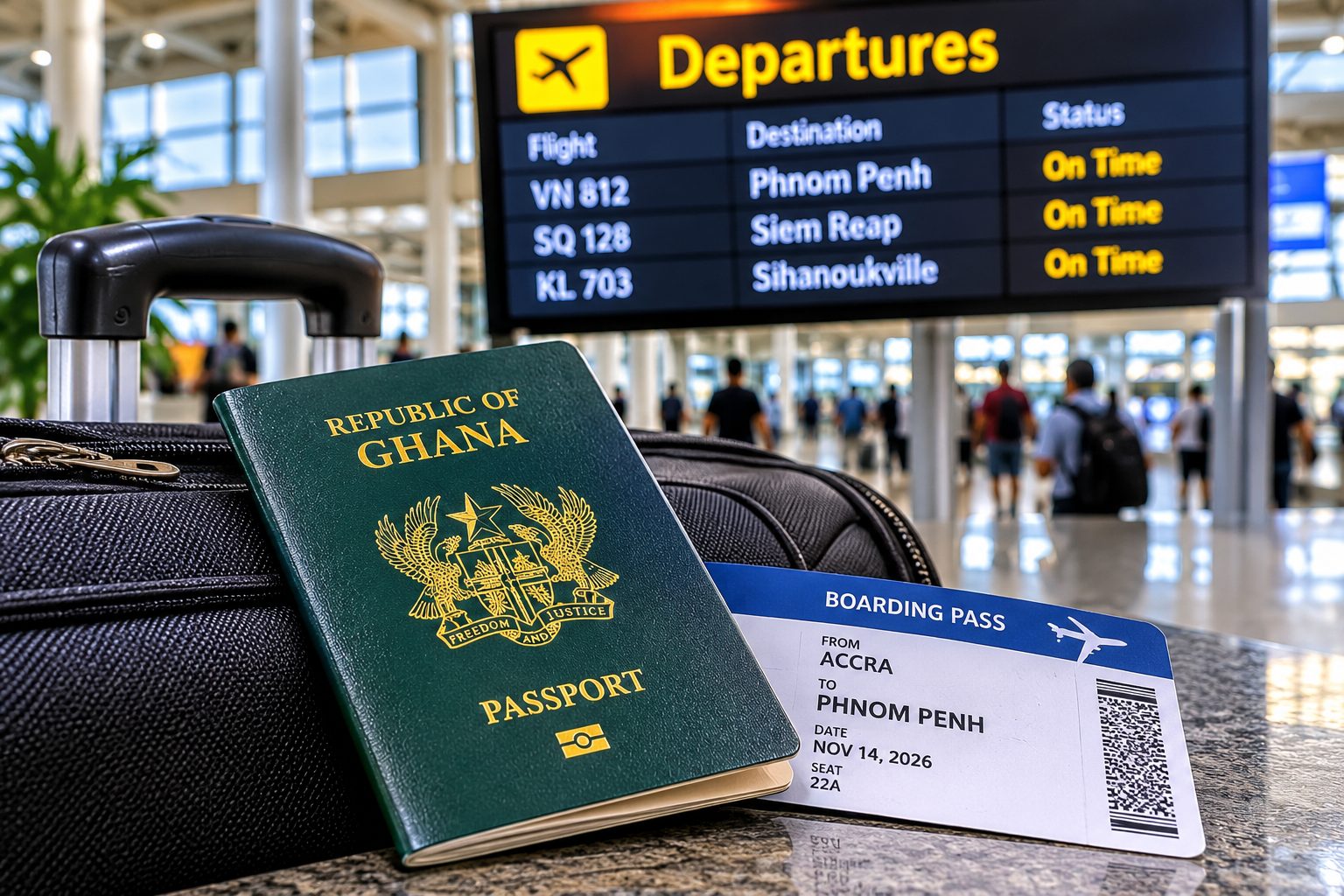
A job offer that promised a better future turned into a nightmare for a 33-year-old Ghanaian man who travelled to Cambodia in search of work. He had been promised a receptionist job with a monthly salary of $1,000. But when he arrived, he discovered that the job had nothing to do with reception work. Instead, he had been recruited into an online scam operation.
His experience is part of a disturbing pattern in which people looking for work abroad are tricked into travelling to other countries, only to find themselves trapped in criminal networks.
The Ghanaian man spent months trying to escape. By the time he finally returned home, he had suffered physical abuse, lost his father and faced the difficult task of rebuilding his life.
How a Job Offer Took Him to Cambodia
According to the Associated Press, the man was a university graduate who had struggled to find work in his area of special education.
He was farming to support his family of four when an acquaintance told him about a job opportunity in Cambodia.
A Chinese company was reportedly looking for an English-speaking receptionist with IT skills. The offer included a monthly salary of $1,000, as well as free accommodation and food.
For someone who had been struggling to find steady employment, it sounded like a good opportunity.
He completed an online interview and received an offer within days. The company also arranged his visa and paid for his flight.
In November 2025, he left Ghana for Cambodia, expecting to start a new job and improve his family's situation. He had no idea what was waiting for him.
The Shocking Discovery After His Arrival
When he landed in Cambodia, he was driven several hours away from the airport to an unfamiliar location.
Things soon took a worrying turn. His passport and mobile phone were taken from him, and he was asked to sign a two-year employment contract instead of the one-year agreement he had originally accepted.
He hesitated, but the men at the location reportedly threatened him until he signed.
He later discovered that he had not been recruited to work as a receptionist. The real job was to become a "chatter" in an online scam operation.
These workers were responsible for contacting people online and starting conversations that could eventually lead to financial fraud.
For the Ghanaian man, this was not the job he had travelled across continents to do. He refused to take part after learning what the operation involved.
That decision put him in serious danger.
Inside the Cambodia Job Scam Network
The operation worked through a system of workers and supervisors, each with a specific role.
According to the AP report, chatters were expected to contact potential victims through online platforms. They often started with ordinary messages, such as greetings or questions about weekend work.
Once someone responded, the chatter would follow prepared scripts to keep the conversation going. The aim was to build enough interest for a supervisor to take over.
The supervisors then used emotional manipulation to gain people's trust and persuade them to send money.
When the Ghanaian man refused to participate, the people running the operation reportedly demanded $6,000 from him. They claimed the money was needed to cover the cost of bringing him to Cambodia.
He could not pay.
Instead of allowing him to leave, they held him against his will. He said he was locked in a dark room for about a month and repeatedly beaten. At times, his attackers used a bat and electric tasers.
The abuse left him with a broken wrist. Months after the incident, he was still struggling to grip objects properly with his left hand.
A Police Raid and the Difficult Road to Freedom
In January 2026, Cambodian police raided the scam centre as part of a wider crackdown on illegal online scam operations.
However, the raid did not mean that everyone inside could immediately return home.
Many former workers were left stranded in Phnom Penh, Cambodia's capital. Some had nowhere to stay and slept on the streets. Others struggled to find food, replace missing travel documents or make arrangements to leave the country.
The Ghanaian man was among them.
After leaving the compound, he made his way to Phnom Penh. Life outside was still difficult. He sometimes slept outdoors and reportedly went two or three days without food.
His passport was still missing, and he had no money to pay for a flight home.
He was eventually detained and taken to a facility known as Mango 2, where he spent two weeks.
His situation later came to the attention of the Eos Collective, a nonprofit organisation that helps stranded workers. The organisation assisted with arrangements for his return to Ghana.
On October 14, 2026, he was taken to the airport in handcuffs and boarded a flight funded by the organisation.
After almost a year away, he was finally going home.
Back in Ghana, but Facing Another Struggle
Returning home brought some relief, but it did not erase what he had been through.
While he was in Cambodia, his father died. He was unable to attend the burial, something that left him feeling that he had failed his family.
He also returned with physical injuries and almost no money.
He could not even afford the transport fare from the capital to the part of Ghana where his family lived. He was also struggling to buy mobile data so he could communicate with them.
His experience shows how difficult life can remain for people who escape trafficking and scam operations. Getting out is only the beginning of the recovery process.
The AP report also described the experiences of other former workers, including Ugandans who spent months sleeping outside while waiting for help to return home.
The Eos Collective said it had helped 220 stranded workers return home. Uganda's ambassador to Malaysia, Betty O. Bigombe, also said she had assisted more than 1,000 former workers with the difficult process of leaving Cambodia.
How Africans Can Protect Themselves from Fake Overseas Jobs
The Ghanaian man's experience highlights the risks Africans can face when accepting jobs in foreign countries.
Many people are willing to travel abroad in search of better salaries and opportunities. But before accepting an offer, it is worth taking the time to check that the job and the company are genuine.
Here are some precautions every prospective overseas worker should take:
- Research the company before accepting the offer.
Do not rely only on what a recruiter tells you. Check the company's official website, physical address and employment history. Look for independent information that confirms the business is legitimate.
- Read your employment contract carefully.
Your contract should clearly explain your job responsibilities, salary, working hours and accommodation arrangements. Never allow anyone to pressure you into signing a different agreement from the one you accepted.
- Be careful with offers that sound too good to be true.
A high salary, free accommodation and a company-paid flight may sound attractive. However, these promises should be checked independently before you make travel plans.
- Keep control of your passport.
Your passport is your personal travel document. An employer should not take it away and use it to stop you from leaving or moving freely.
- Let your family know where you are going.
Share your employment contract, visa details, flight information, employer's address and contact details with trusted family members or friends before travelling.
- Check your visa and work permit.
Make sure your visa allows you to work in the country. Do not assume that immigration arrangements will be completed after you arrive.
- Know where to get help.
Save the contact details of your country's embassy or consulate in the country where you intend to work. If you are threatened, held against your will or forced to participate in illegal activities, seek help from the appropriate authorities or a recognised anti-trafficking organisation when it is safe to do so.
The Risks of Chasing Opportunities Abroad
Cambodia has become a major location for online scam operations in Southeast Asia. Data cited in the Associated Press report from CyberScamMonitor identified at least 182 confirmed scam locations in the country, with evidence pointing to roughly 300.
The problem involves people from different countries. While some knowingly take part in these illegal activities, others are lured there through fake overseas jobs and end up trapped in conditions they never agreed to.
Cambodian authorities have stepped up efforts to shut down the operations, but the experiences of former workers show that helping victims escape and return home remains a challenge.
For Africans considering employment abroad, the Ghanaian man's experience is a reminder to look beyond an attractive salary or promises of free travel and accommodation.
A job offer should give you an opportunity to earn a living and support your family. It should never cost you your freedom or put your life in danger.
Sources
Version 1.0. 54gist stories are edited before publication and updated as facts change. Spotted an error? Tell our editors.