UK Rejects 84% of Nigerian Student Visa Interviewees: What Applicants Need to Know
Nigerian students hoping to study in the United Kingdom are facing increased scrutiny during the student visa process, following a report that 84 per cent of Nigerian applicants selected for credibility interviews were refused visas between May and October 2026.
The figures, reported by international education publication The PIE News and subsequently covered by Nigerian newspapers, highlight the importance of demonstrating genuine study intentions and understanding the course and institution listed in a visa application.
However, the headline requires an important clarification: the 84 per cent figure does not represent the rejection rate for every Nigerian who applied for a UK student visa. It applies specifically to Nigerian applicants who were invited to attend credibility interviews during the six-month reporting period. For prospective students, the development is a reminder to understand the official requirements, prepare accurate documents and be able to explain their academic decisions clearly.
What does the 84 per cent rejection figure mean?
According to The PIE News, UK Visas and Immigration (UKVI) conducted 11,415 credibility interviews involving prospective international students between May and October 2026. Of those interviewed, 9,043 were considered non-credible by immigration caseworkers, representing approximately 79 per cent of all applicants interviewed across the nationalities covered. Nigeria recorded an 84 per cent rejection rate among its interviewed applicants, placing it third in the reported ranking.
The country figures were:
• Nepal: 92 per cent
• India: 89 per cent
• Nigeria: 84 per cent
• Bangladesh: 79 per cent
• Sri Lanka: 79 per cent
• Pakistan: 73 per cent
The figures were obtained from a UKVI briefing document seen by The PIE News. UKVI cautioned that the information covered only six months and should not be treated as a complete annual picture. Another important finding was the increase in the proportion of Nigerian applicants invited for interviews. The report said the share rose from seven per cent in 2025 to 21 per cent in 2026.
UKVI reportedly attributed the increase to a greater need for additional scrutiny of some applications from Nigeria. These figures show that applicants selected for interviews faced a high level of refusal during the period. They do not establish that 84 per cent of all Nigerian student visa applications were rejected.
Why were some Nigerian applicants refused?
The UKVI briefing identified several issues that contributed to negative credibility assessments. One recurring concern was inadequate research into the applicant's chosen university or educational institution. According to the report, some applicants struggled to explain why they had selected a particular institution, why they wanted to study in the UK and how the course fitted into their future plans.
Other reasons included limited knowledge of the chosen program or subject, concerns about English-language ability and questions about the credibility of applicants' financial arrangements. These concerns are important because a student visa application involves more than receiving an admission offer. Applicants must satisfy immigration requirements and demonstrate that their proposed studies are genuine.
Limited knowledge of the chosen university
Students should understand the institution they intend to attend. This includes knowing the university's location, the course structure, the qualification being offered and the reasons the institution is appropriate for their academic interests. An applicant who cannot explain basic details about their chosen university may raise questions about how carefully the study decision was considered.
Unclear reasons for choosing the course
Applicants may also face questions about why they selected a particular program. A credible explanation should reflect their actual academic background, interests and plans. They should understand the subjects covered by the course and what they hope to gain from completing it.
Questions about English-language ability
UKVI may assess whether an applicant meets the English-language requirement applicable to their course and circumstances. Applicants should understand the English-language evidence required for their application and ensure that any test results or other accepted evidence are genuine and valid.
Concerns about financial evidence
Financial documentation is another important part of the process. Applicants must demonstrate that they can meet the relevant course fees and living costs under the applicable immigration rules. The documents must satisfy UKVI's requirements concerning the source, availability and holding period of the funds.
How applicants can prepare before a credibility interview
A credibility interview is an opportunity for immigration caseworkers to assess whether an applicant genuinely intends to study the course for which they have applied. Preparation should begin well before an interview invitation arrives.
Research the university: Understand its location, facilities, course structure, teaching approach and the reasons it suits your academic needs.
Study the course details: Read the official program description and understand its main modules, duration, qualification and entry requirements.
Understand your academic choices: Be prepared to explain how the course relates to your previous education, interests and realistic future plans.
Review your application: Make sure you understand the information submitted, including your university choice, course details, and financial arrangements and supporting documents.
Check your English-language requirements: Confirm which evidence is required for your particular application and ensure that your documents meet the relevant standard.
Answer honestly: Give clear answers based on your own circumstances and understanding. Do not memorize invented explanations or provide information that conflict with your application.
Ask for clarification when necessary: If a question is unclear during an interview, it is better to ask the interviewer to explain it than to guess.
Preparation should help applicants communicate their genuine intentions, not teach them to present a false account.
Before you apply: A UK student visa checklist
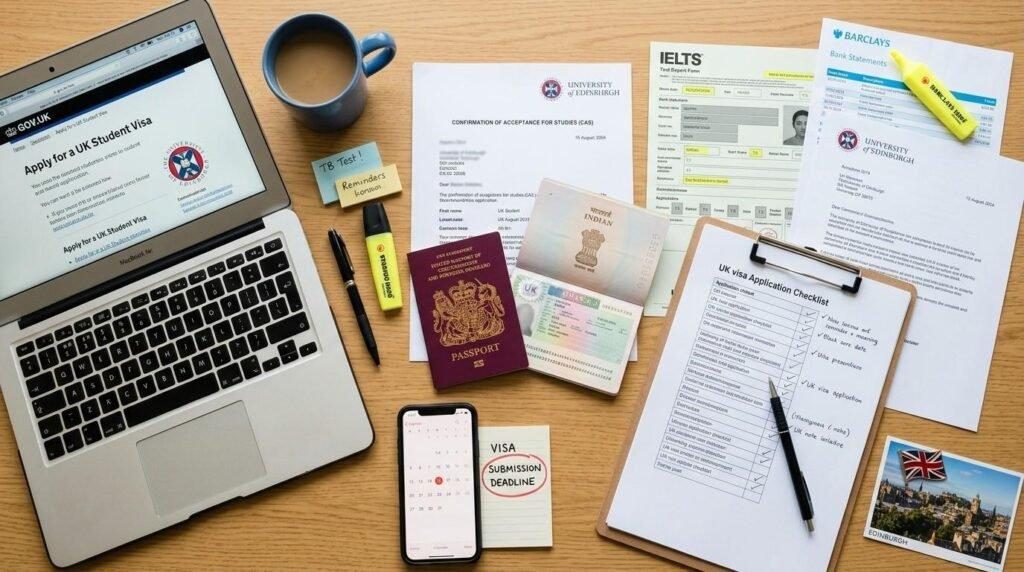
The UK government's official Student visa guidance sets out the documents and evidence applicants may need. Requirements can vary depending on individual circumstances, so the current GOV.UK guidance should always take priority over advice from social media or unofficial agents.
Applicants should review the following points before submitting an application:
•
Valid passport: Check that your passport or other accepted travel document is current.
•
Confirmation of Acceptance for Studies (CAS): Obtain the CAS issued by your licensed education provider.
•
Course details: Confirm that the course and institution meet the Student visa requirements.
•
Tuition fees: Check the course fees stated on your CAS and understand what has already been paid.
•
Living-cost evidence: Confirm the required maintenance funds for your circumstances and study location.
•
Bank or sponsorship documents: Make sure financial evidence meets UKVI's rules on acceptable funds, access and the required holding period.
•
English-language evidence: Check the applicable English requirement and the evidence accepted for your application.
•
ATAS certificate: Confirm whether your course and nationality require an Academic Technology Approval Scheme certificate.
•
Tuberculosis test: Check whether you need a TB test and follow the official instructions for applicants from your country.
•
Additional documents: Review whether your circumstances require other evidence, including parental consent if you are under 18.
•
Application details: Check that the information on your application agrees with your passport, CAS and supporting documents.
The UK government also requires applicants under 18 to provide written consent from their parent or legal guardian covering the visa application, living and care arrangements and travel. Evidence of the relationship may also be required.
The official document list is available through the UK government's Student visa guidance.
What applicants should know about financial requirements
Financial evidence is an area that deserves particular attention. UKVI requires Student visa applicants to show that they can pay their outstanding course fees and meet the applicable living costs. The amount required depends on factors including the location of the institution and the length of the course. There are also specific rules covering acceptable financial evidence and how long funds must be held.
For example, UKVI's published guidance explains that personal or eligible family funds must be accessible and generally held for 28 consecutive days. The evidence must also meet the relevant date requirements. Applicants should not assume that a large account balance automatically satisfies the rules. The type of account, ownership of the funds, access to the money and supporting documents all matter.
Those relying on a parent, partner, student loan or official financial sponsorship should check the specific evidence required for that arrangement. Because immigration requirements can change, applicants should confirm the latest financial thresholds and documentation rules before submitting an application.
Why admission does not automatically guarantee a visa
Receiving an offer from a British university is an important step, but it does not guarantee that a student visa will be granted. Universities assess applicants for admission based on their academic and institutional requirements. UKVI separately considers whether the applicant meets the immigration rules.
This means a student can receive an admission offer and still face questions about the credibility of their proposed studies or the evidence submitted with their visa application. The distinction is important for families planning to spend significant money on tuition deposits, accommodation and other preparations. Applicants should avoid making major financial commitments based on the assumption that an admission letter alone guarantees immigration approval.
What UKVI's position means for international students
The report also included comments from Oliver Rae, head of Work, Study, Family and Ukraine Services at the Home Office. He said the government's approach was not intended to impose a cap on international student numbers, but to focus on applicants considered genuine students.
His comments suggest that the authorities are emphasizing closer assessment of applications they believe require additional scrutiny. For Nigerian applicants, this makes careful preparation especially important. Understanding the course, institution, financial requirements and purpose of study can help applicants present their circumstances accurately. However, no amount of interview preparation can guarantee a visa decision. Each application is assessed on its own circumstances and the applicable immigration rules.
Where students should get reliable visa information
Prospective applicants should use official UK government information as their main reference when preparing a Student visa application. The GOV.UK website provides guidance on eligibility, required documents, financial evidence, English-language requirements and the application process.
Students should also obtain course information directly from their chosen university and ensure that the institution is authorized to sponsor international students under the relevant route. Education agents may provide administrative support, but applicants remain responsible for the accuracy of their applications and supporting documents.
The reported 84 per cent rejection rate is a serious warning for Nigerian students selected for credibility interviews, but it should not be mistaken for the refusal rate of all Nigerian applicants. The most useful response is to understand the rules, research academic choices carefully, prepare genuine financial evidence and provide clear, consistent answers during any interview. For anyone considering studying in the UK, accurate information and careful planning remain essential before submitting a visa application.
Version 1.0. 54gist stories are edited before publication and updated as facts change. Spotted an error? Tell our editors.