South Africa’s Local Elections Put ANC Losses and Coalition Talks in Spotlight.
South Africa’s Local Elections Put ANC Losses and Coalition Talks in Spotlight
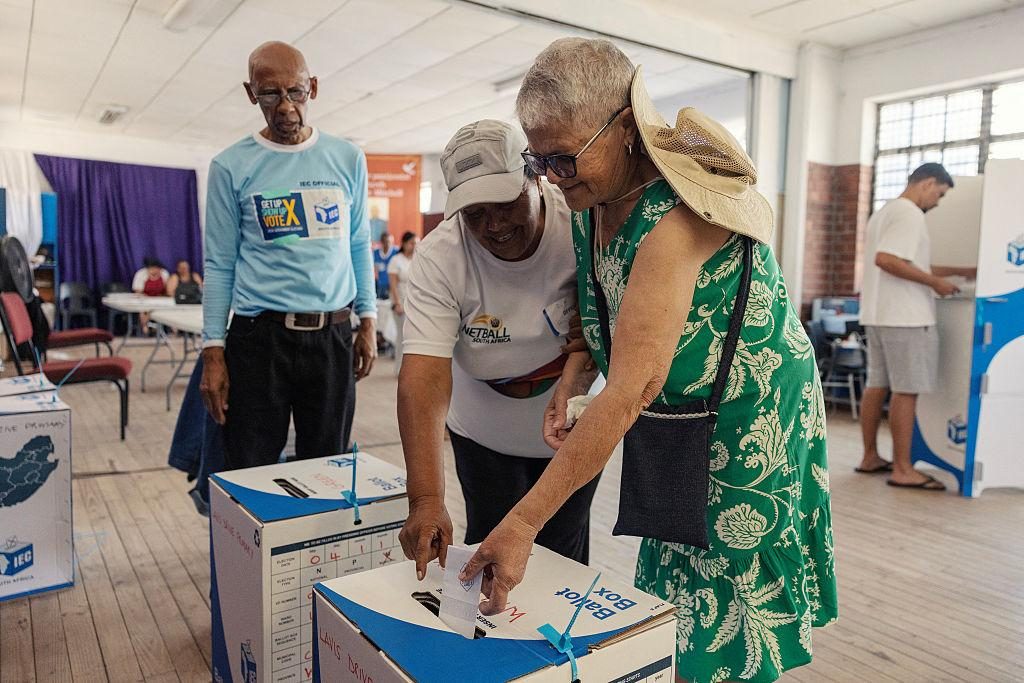
South Africa’s Electoral Commission has declared the 2026 local government elections free and fair, with voter turnout reaching 52 per cent as the African National Congress (ANC) recorded its weakest local election performance since the end of apartheid.
The elections, held on November 4, attracted approximately 14.9 million voters out of 29.2 million registered voters, according to the Electoral Commission of South Africa (IEC).
The turnout represents an increase of 6.1 percentage points from the 45.9 per cent recorded during the 2021 local government elections.
However, the results have placed the ANC under renewed political pressure. Although it remained the largest party nationally, it secured only 30.76 per cent of the vote, a significant decline from the 45.59 per cent it received in 2021.
The results also point to a more fragmented political landscape, with several municipalities expected to depend on coalition arrangements to form their local governments.
Turnout rises to 52 per cent
The IEC announced the final election results on November 8, confirming that all 213 municipal councils had been finalised and declared.
According to the commission, approximately 14.9 million people participated in the elections, representing 52 per cent of registered voters.
The increase from 2021 suggests that a larger proportion of registered voters participated in this election cycle.
The polls involved 521 political parties and 636 independent candidates competing for 10,526 council seats.
IEC chairperson Mosotho Moepya said the commission’s declaration that the elections were free and fair was informed by the findings of its 2026 Elections Satisfaction Survey.
The survey found that 90 per cent of respondents considered the voting procedures free, while 91 per cent considered them fair. It also reported that 81 per cent of respondents trusted the electoral commission.
However, the IEC acknowledged that issues including intimidation, impartiality, inclusive voting and information gaps still required attention.
The commission also confirmed that a voting station in Douglas, Northern Cape, would undergo a re-vote after ballot papers were destroyed before counting could take place.
ANC remains largest party despite declining support
The ANC retained its position as South Africa’s largest political party, but its share of the national vote fell considerably.
The party received 30.76 per cent, compared with 45.59 per cent in the 2021 local government elections.
The Democratic Alliance (DA) finished second with 24.64 per cent, while the uMkhonto weSizwe Party (MK Party) secured 9.76 per cent.
The Economic Freedom Fighters (EFF) received 6.22 per cent, while ActionSA secured 5.67 per cent.
The results represent a major change in South African local politics, where the ANC has historically maintained a dominant position since the country’s first democratic elections in 1994.
Its declining support has been associated with public dissatisfaction over unemployment, corruption allegations and service delivery challenges.
For the ANC, the results raise questions about its ability to rebuild public confidence and retain political influence at municipal level.
Nevertheless, remaining the largest party means it will continue to play an important role in negotiations and government formation across several municipalities.
Coalition politics becomes increasingly important
One of the biggest consequences of the election results is the number of municipalities where no political party secured an outright majority.
The IEC reported that 72 municipalities had parties with outright majorities, while 127 were classified as hung councils, where no party secured more than 50 per cent of the seats.
In these municipalities, parties will need to negotiate agreements with other political groups to establish governing arrangements.
Coalition negotiations are particularly important in major urban centres because they determine who controls municipal councils and who takes responsibility for local administration.
The DA secured an outright majority in Cape Town, while several other major cities are expected to require coalition negotiations.
These arrangements could involve agreements on mayoral positions, council leadership, budgets and policy priorities.
The outcome means that parties with smaller shares of the national vote could still become important participants in municipal government formation.
However, coalition agreements can also create uncertainty when political partners disagree over leadership positions or policy decisions.
The coming weeks will therefore be important in determining how municipalities are governed.
What the results mean for ordinary South Africans
Although election results are often discussed in terms of political parties and percentages, local government has a direct influence on people’s everyday lives.
Municipal councils are responsible for important services such as water supply, sanitation, refuse collection, local roads, electricity distribution where applicable, and community infrastructure.
For residents, the main concern after the elections will be whether newly formed councils can improve these services and respond to problems in their communities.
In areas where coalition governments are formed, residents will be watching whether political parties can cooperate long enough to provide stable leadership and approve municipal budgets.
Unemployment, housing, deteriorating infrastructure and the reliability of basic services are also likely to remain important issues.
The election results give voters an opportunity to assess the performance of political parties, but the responsibility of elected representatives continues long after the ballots have been counted.
Residents will be able to judge their local leaders through practical improvements, including better-maintained roads, reliable water services, cleaner neighbourhoods and more effective municipal administration.
What happens next?
With the IEC’s declaration complete, attention is now shifting towards the formation of municipal governments.
Political parties will need to negotiate where no party has won an outright majority. The outcome of these discussions will determine which parties lead individual councils and how municipal responsibilities are shared.
According to Reuters reporting, parties face a 14-day period to reach agreements before councils are formed.
The ANC will also face pressure to examine its performance and determine how to respond to declining voter support.
For other political parties, the results provide opportunities to gain influence in municipalities where their council seats could prove important in coalition negotiations.
Meanwhile, the IEC is expected to review the election process and address areas that require improvement.
Voters will be watching service delivery
South Africa’s 2026 local government elections have produced two important developments: increased voter participation and a weaker national result for the ANC.
The 52 per cent turnout indicates that more registered voters participated than in 2021, while the ANC’s 30.76 per cent share reflects a significant change in the country’s political landscape.
However, the significance of the election will ultimately be measured by what happens in local communities.
As coalition negotiations begin and newly elected councillors prepare to take office, ordinary South Africans will be watching whether political competition produces better municipal leadership, improved services and greater accountability.
For voters, the next important question is not simply which party wins control of a council, but whether those elected can deliver on the responsibilities they have been given.
Version 1.0. 54gist stories are edited before publication and updated as facts change. Spotted an error? Tell our editors.