Somalia Orders UAE Ambassador to Leave Within 72 Hours as Diplomatic Tensions Escalate
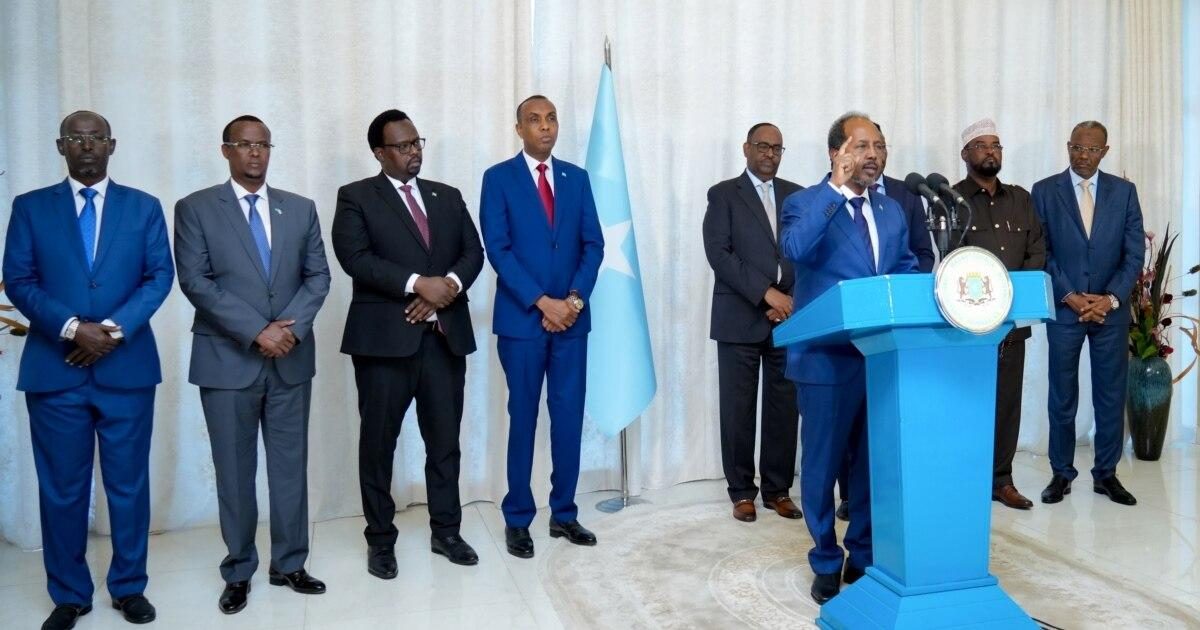
MOGADISHU, Somalia — Somalia has ordered the United Arab Emirates (UAE) ambassador to leave the country within 72 hours and recalled its own ambassador from Abu Dhabi, marking a significant escalation in diplomatic tensions between the two countries and raising fresh concerns about stability in the strategically important Horn of Africa.
The decision, announced on Thursday, November 19, 2026, follows growing disagreements over Somalia's sovereignty, regional political alliances and the UAE's relationships with several self-governing territories within Somalia.
Somalia's government accused the Emirates of undermining its national unity and supporting armed forces outside the control of the federal government. The UAE, however, rejected the accusations and described Mogadishu's approach as hostile and counterproductive.
The development has attracted international attention because of the two countries' longstanding security and economic relationships and the UAE's growing influence across the Horn of Africa.
##What Triggered the Diplomatic Dispute?##
The latest confrontation developed against the background of disagreements that have persisted throughout 2026.
On Tuesday, November 17, Somali President Hassan Sheikh Mohamud accused the UAE of providing economic and political support to certain regional administrations in Somalia in ways that undermine the authority of the federal government.
The president particularly raised concerns about the UAE's relationships with Somaliland, Puntland and Jubbaland, three Somali territories with significant political and administrative autonomy.
According to the Somali government, these relationships have contributed to divisions within the country and weakened efforts to maintain national unity.
The disagreement intensified on Thursday, November 19, when Somalia's Cabinet met in Mogadishu under Prime Minister Hamza Abdi Barre.
Following the meeting, Information Minister Abdifatah Kasim Mohamud announced that the government had instructed the UAE ambassador to leave Somalia within 72 hours.
The government also directed the Ministry of Foreign Affairs to recall Somalia's ambassador to the UAE for consultations.
During a broadcast on the state-run news agency, the information minister described the alleged UAE actions as an "open invasion" against Somalia's sovereignty, security, territorial integrity and national unity.
He called on Somalis to unite in defending their country and warned that measures would be taken against individuals cooperating with what the government described as Emirati aggression.
However, the minister did not provide detailed public evidence identifying the specific actions that prompted the expulsion order.
The announcement represented one of the sharpest diplomatic confrontations between Mogadishu and Abu Dhabi in recent years.
##UAE Rejects Somalia's Accusations##
The United Arab Emirates responded by condemning Somalia's decision, describing it as an irresponsible and hostile escalation that could damage relations between the two countries.
Anwar Gargash, diplomatic adviser to the UAE president, criticized President Mohamud in a public statement, accusing him of placing personal political calculations ahead of Somalia's national interests.
The UAE Foreign Ministry also expressed regret over what it described as attempts by the Somali government to involve the Emirates in its internal political disagreements.
Abu Dhabi maintained that decisions affecting bilateral relations should be guided by mutual interests rather than domestic political conflicts.
The UAE further pointed out that it had already closed its embassy in Mogadishu and withdrawn its diplomatic personnel in January 2026 following an earlier deterioration in relations.
It nevertheless reaffirmed its commitment to maintaining ties with the Somali people.
The exchange demonstrates how far relations between the two countries have deteriorated, despite their previous cooperation in security, military training, infrastructure development and commercial investment.
##A Timeline of the Growing Dispute##
The diplomatic crisis did not emerge suddenly. It developed through a series of disagreements throughout 2026.
January 2026: Somalia announced the cancellation of agreements with the UAE covering port operations, government institutions, security and defense cooperation. The decision followed allegations that Abu Dhabi was undermining Somalia's sovereignty. Somaliland, Puntland and Jubbaland rejected Mogadishu's authority to cancel agreements involving their territories.
January 2026: The UAE closed its embassy in Mogadishu and withdrew its diplomatic staff, citing what it described as hostile actions by the Somali government.
November 17, 2026: President Hassan Sheikh Mohamud publicly accused the UAE of supporting regional administrations and armed forces outside the federal government's control.
November 19, 2026: Somalia ordered the UAE ambassador to leave within 72 hours and recalled its own ambassador from Abu Dhabi. The UAE subsequently condemned the decision and rejected the accusations.
These developments have transformed what initially appeared to be disagreements over bilateral agreements into a broader confrontation involving national sovereignty, territorial authority and regional influence.
##Why the Dispute Matters to the Horn of Africa##
The disagreement between Somalia and the UAE extends beyond diplomatic relations between two countries.
The Horn of Africa occupies a strategically important position connecting the Red Sea, the Gulf of Aden and the Indian Ocean. These waterways support international shipping, energy transportation and commercial activities linking Africa, the Middle East, Asia and Europe.
The UAE has invested significantly in port infrastructure and commercial ventures across the region. Its interests in Somalia include relationships with regional administrations and investments connected to important coastal facilities.
One major example is the port of Berbera in Somaliland, where Dubai-based DP World announced plans to invest up to $442 million in port development.
The port's location makes it commercially important for maritime transportation and regional trade.
However, Somaliland declared independence from Somalia in 1991, although it has not received widespread international recognition as an independent state.
Consequently, relationships between foreign governments and Somaliland remain politically sensitive for Somalia's federal authorities, who maintain that the territory remains part of the Somali Republic.
The disagreement therefore raises important questions about the authority of Somalia's federal government to regulate foreign agreements involving regional administrations.
It also highlights the competing interests of governments and commercial organizations seeking influence over strategic infrastructure in the Horn of Africa.
Another major concern is regional security.
The UAE has previously supported Somalia through military training, financial assistance and logistical cooperation. Any further breakdown in relations could complicate existing security arrangements and create additional challenges for Somalia's efforts to strengthen its national security institutions.
Somalia continues to face threats from the militant group al-Shabab, making international security partnerships particularly important. A prolonged diplomatic confrontation could therefore affect cooperation at a time when the country faces considerable internal political and security challenges.
##Somalia Faces Internal Political Challenges##
The diplomatic dispute is also unfolding during a sensitive period in Somalia's domestic politics.
The country has experienced disagreements over constitutional changes, electoral arrangements and the distribution of political authority between the federal government and regional administrations.
The United Nations recently ended its political mission in Somalia after more than three decades, without an agreed replacement mechanism to mediate political disagreements between rival leaders.
Earlier in November, Somalia's Supreme Court ruled that President Hassan Sheikh Mohamud's term had expired and ordered elections within 90 days, adding another dimension to the country's political uncertainty.
The election disagreement has previously contributed to armed clashes in Mogadishu, demonstrating the fragile nature of the country's political environment.
Against this background, the confrontation with the UAE could further complicate efforts to build national consensus.
The relationship between Mogadishu and the regional administrations is particularly important because Somaliland, Puntland and Jubbaland maintain their own political and administrative structures.
Their rejection of the federal government's January decision to cancel agreements with the UAE illustrates the difficulty Mogadishu faces in establishing a uniform foreign-policy position across the country.
##What Happens Next Diplomatically?##
The immediate question is whether the two governments will take further steps that could lead to a complete breakdown in their diplomatic relationship.
Somalia's 72-hour order places pressure on the UAE to respond to the expulsion decision, although the practical implications are complicated by Abu Dhabi's earlier announcement that it had closed its embassy and withdrawn diplomatic staff from Mogadishu.
The recall of Somalia's ambassador also indicates that Mogadishu is prepared to reduce its diplomatic engagement with the Emirates.
Several possible developments could follow.
First, both countries could maintain their current positions, resulting in a prolonged diplomatic standoff. Such a situation could limit communication between their governments and make negotiations more difficult.
Second, regional or international organizations could encourage dialogue to prevent the dispute from affecting wider stability in the Horn of Africa. The African Union and other diplomatic partners may have an interest in preventing further deterioration.
Third, disagreements over port agreements, military cooperation and regional partnerships could continue, particularly if Somalia maintains its position that foreign governments must deal with the federal authorities on matters affecting national sovereignty.
However, no immediate diplomatic breakthrough has been announced, and the possibility of renewed negotiations remains uncertain.
Version 1.0. 54gist stories are edited before publication and updated as facts change. Spotted an error? Tell our editors.