RJD Backs Delimitation Bill: Why It Matters for India
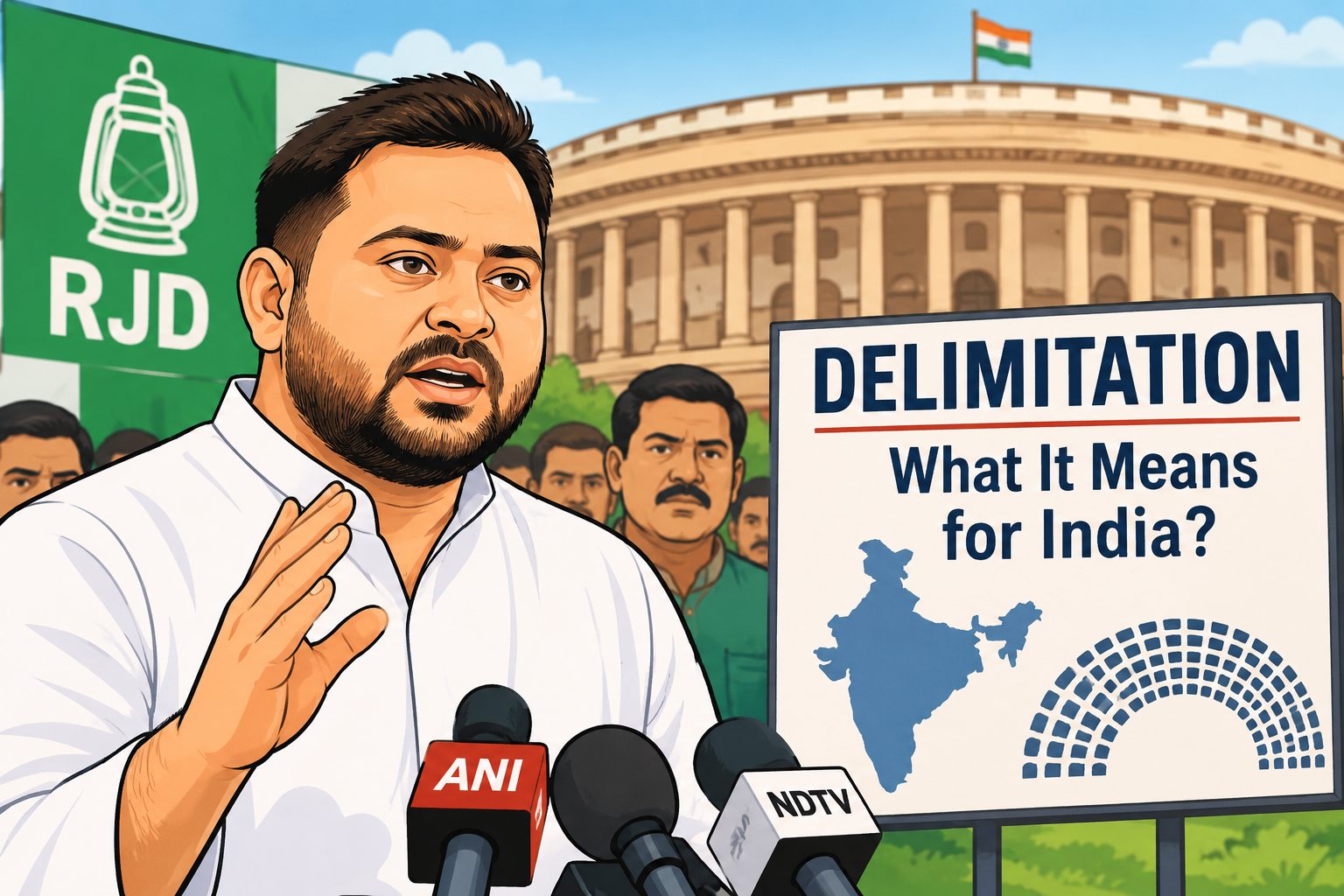
RJD Maintains Its Position on India's Delimitation Bill Amid Political Tensions
The Rashtriya Janata Dal (RJD) has maintained its established position on India's proposed delimitation bill, following renewed political discussions ahead of a special parliamentary sitting scheduled to begin on November 30, 2026.
RJD working president and Bihar's Leader of Opposition, Tejashwi Yadav, said the government should have consulted all political parties before moving forward with the proposed legislation. His comments have attracted attention because the party is an important member of the opposition INDIA alliance.
Speaking to journalists, Yadav questioned the timing of the special parliamentary sitting, suggesting that the government might be considering upcoming state elections. He also maintained that his party's position on the delimitation issue was already known.
Delimitation refers to the process of redrawing electoral constituency boundaries and adjusting the number of seats allocated to different states and regions. In India, the exercise can significantly influence political representation in the Lok Sabha and state legislative assemblies.
The proposed legislation has generated debate because changes to constituency boundaries and seat allocation could affect the political influence of different states. Population differences between northern and southern India have been a major concern, particularly among states that have made considerable progress in controlling population growth.
According to reports, the government's revised proposal includes a 50 per cent increase in parliamentary and state assembly seats across states and union territories. It also seeks to use the 2011 Census for the proposed delimitation exercise while maintaining the existing relative distribution of seats among states.
The issue has also been linked to the implementation of the 33 per cent reservation for women in Parliament and state assemblies.
Meanwhile, opposition parties have raised concerns about consultation, political representation and the government's approach to the proposed changes. These disagreements could create further challenges for cooperation within the INDIA alliance.
The special parliamentary sitting is expected to provide an opportunity for lawmakers to debate the proposals. The outcome could influence India's electoral structure and the balance of political representation across the country.
For now, the RJD has not announced support for the proposed bill. Its position remains an important part of the wider political debate.
Version 1.0. 54gist stories are edited before publication and updated as facts change. Spotted an error? Tell our editors.