Flamingos’ Historic World Cup Win Gives Nigeria Fresh Feel-Good Sports Buzz.
Flamingos’ Historic World Cup Win Gives Nigeria Fresh Feel-Good Sports Buzz
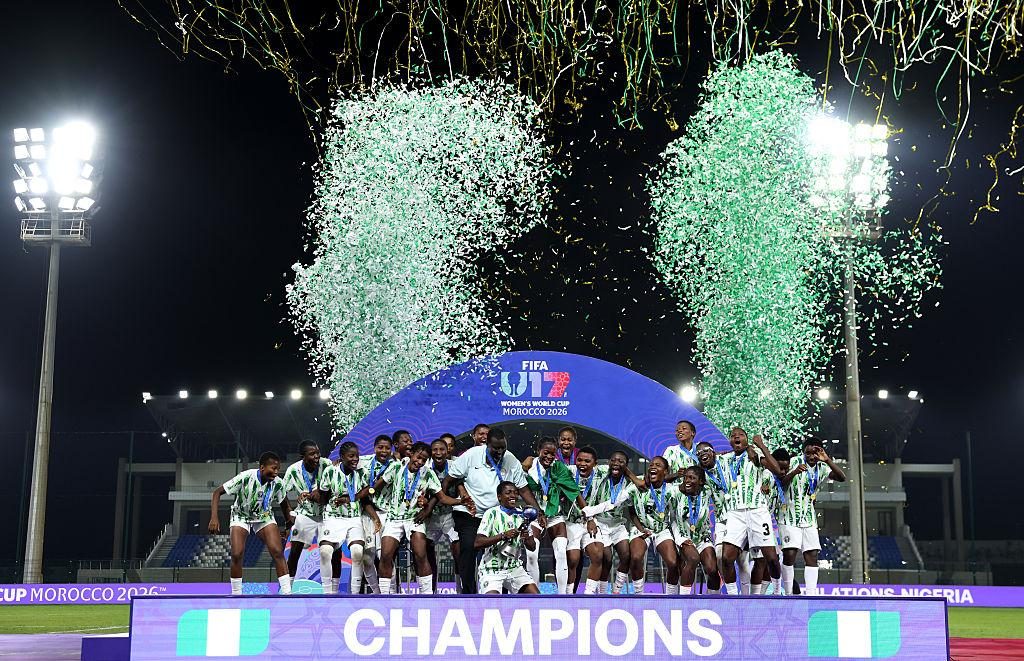
Nigeria’s Flamingos defeated Japan 2–1 to win the FIFA U-17 Women’s World Cup for the first time, delivering a historic victory that has brought celebrations across the country and renewed attention to women’s football.
The final was played on November 7 at the Mohammed VI Football Complex in Rabat, Morocco. Goals from Awawu Bashiru and Oluebube Umejiaku secured the trophy for Nigeria, while Fuki Ito scored Japan’s only goal.
The victory made Nigeria the first African country to win the FIFA U-17 Women’s World Cup. It also marked the first time an African women’s team had won a FIFA World Cup title at any level.
For the young Nigerian players, the achievement represents the reward for a difficult tournament campaign. For the country, it is an important moment for women’s football and a reminder of the talent emerging from its youth development system.
How the final was won
The Flamingos started the final with confidence, putting pressure on Japan and creating opportunities in the opening stages.
Nigeria eventually broke the deadlock in the 39th minute through Awawu Bashiru. Her effort from outside the penalty area slipped through the hands of Japanese goalkeeper Kou Kadowaki and found the back of the net.
Nigeria returned from the break with another important goal just two minutes into the second half.
In the 47th minute, Oluebube Umejiaku collected a long pass from Esther Stephen, controlled the ball and lifted it over the advancing goalkeeper to make it 2–0.
Japan attempted to recover and increased its pressure as the match progressed. The team eventually pulled one goal back in the 80th minute through Fuki Ito, who finished a move following a corner.
The late goal made the closing stages tense, but Nigeria defended its advantage and held on until the final whistle.
The 2–1 victory secured the Flamingos’ maiden world title and brought an end to Nigeria’s wait for the trophy.
Umejiaku and Bashiru lead Nigeria’s attack
Two players played particularly important roles in the final.
Awawu Bashiru gave Nigeria the opening goal, putting the team ahead after a competitive first half.
Oluebube Umejiaku then delivered the decisive second goal. Her performance in the tournament earned her the Golden Ball award, which recognises the competition’s best player.
The 16-year-old forward scored three goals and provided two assists during the tournament, while contributing to Nigeria’s attacking play throughout the campaign.
Her influence extended beyond the final. She scored against Poland, the Democratic People’s Republic of Korea and Mexico, and provided assists against Puerto Rico and Brazil.
Umejiaku’s recognition as the tournament’s best player added another achievement to Nigeria’s historic campaign.
The team was also guided by head coach Hakeem Busari, who was appointed in April 2026. His first major responsibility was to lead the Flamingos through qualification and prepare them for the competition in Morocco.
His side eventually delivered Nigeria’s most successful performance in the tournament’s history.
From opening defeat to world champions
The Flamingos’ victory was particularly impressive because their campaign did not begin smoothly.
Nigeria opened the tournament with a 2–1 defeat to Poland, putting pressure on the team to recover in its remaining group matches.
The players responded with victories over Puerto Rico and defending champions North Korea, securing their progress to the knockout stage.
They then defeated Mexico 2–1 in the round of 16 and overcame Venezuela in the quarter-finals.
Their biggest statement before the final came against Brazil, whom they defeated 3–1 in the semi-final to reach their first-ever U-17 Women’s World Cup final.
The victory over Japan completed a run of six consecutive wins after the opening defeat.
It also made Nigeria the first team in the competition’s history to lose its opening match and still go on to win the title.
The recovery demonstrated the players’ ability to respond to setbacks and maintain their focus under pressure.
Why the victory matters for girls’ football in Nigeria
Beyond the trophy, the achievement could have a wider influence on the development of girls’ football in Nigeria.
For young girls interested in playing football, seeing their peers become world champions offers an example of what is possible through talent, training and competitive opportunities.
Nigeria has produced several generations of talented female footballers, but young players still need access to quality coaching, proper facilities, organised competitions and financial support to develop their abilities.
The Flamingos’ achievement provides an opportunity to strengthen that foundation.
Schools, grassroots football academies, local clubs and football administrators can use the victory to encourage more girls to participate in the sport.
It also places attention on the importance of identifying talented players early and providing them with a pathway from youth football to professional and senior national teams.
However, one successful tournament cannot solve the challenges facing women’s football. Sustained investment, improved facilities, better player welfare and regular competitions will be necessary if the achievement is to produce long-term progress.
A moment of pride for Nigerian football
The victory attracted congratulations from football authorities and public officials.
FIFA President Gianni Infantino congratulated Nigeria, describing the achievement as well deserved and recognising the team’s historic place in African football.
Nigeria’s National Sports Commission also praised the players, describing the result as a defining moment for Nigerian and African women’s football.
The team’s achievement has given Nigerian supporters another reason to celebrate and placed the country at the centre of international youth football discussions.
It also adds to Nigeria’s record in the men’s and women’s U-17 competitions, making the country the first African nation to win both categories.
What comes after the celebrations?
The Flamingos’ historic victory deserves recognition, but the next challenge is ensuring that the players and the wider women’s game benefit from the achievement.
The young footballers will need continued development opportunities as they progress towards higher levels of competition.
For Nigerian football administrators, the victory provides an opportunity to strengthen youth development programmes and improve the structures supporting female players.
For girls watching from schools, communities and local football academies, the message is equally important: the path to international success is possible when talent receives the right support.
Nigeria’s 2–1 victory over Japan will be remembered as a historic moment. Its lasting importance, however, will depend on what the country does next to support the next generation of girls who want to play football.
Version 1.0. 54gist stories are edited before publication and updated as facts change. Spotted an error? Tell our editors.