Canary Islands arrivals raise migration questions again
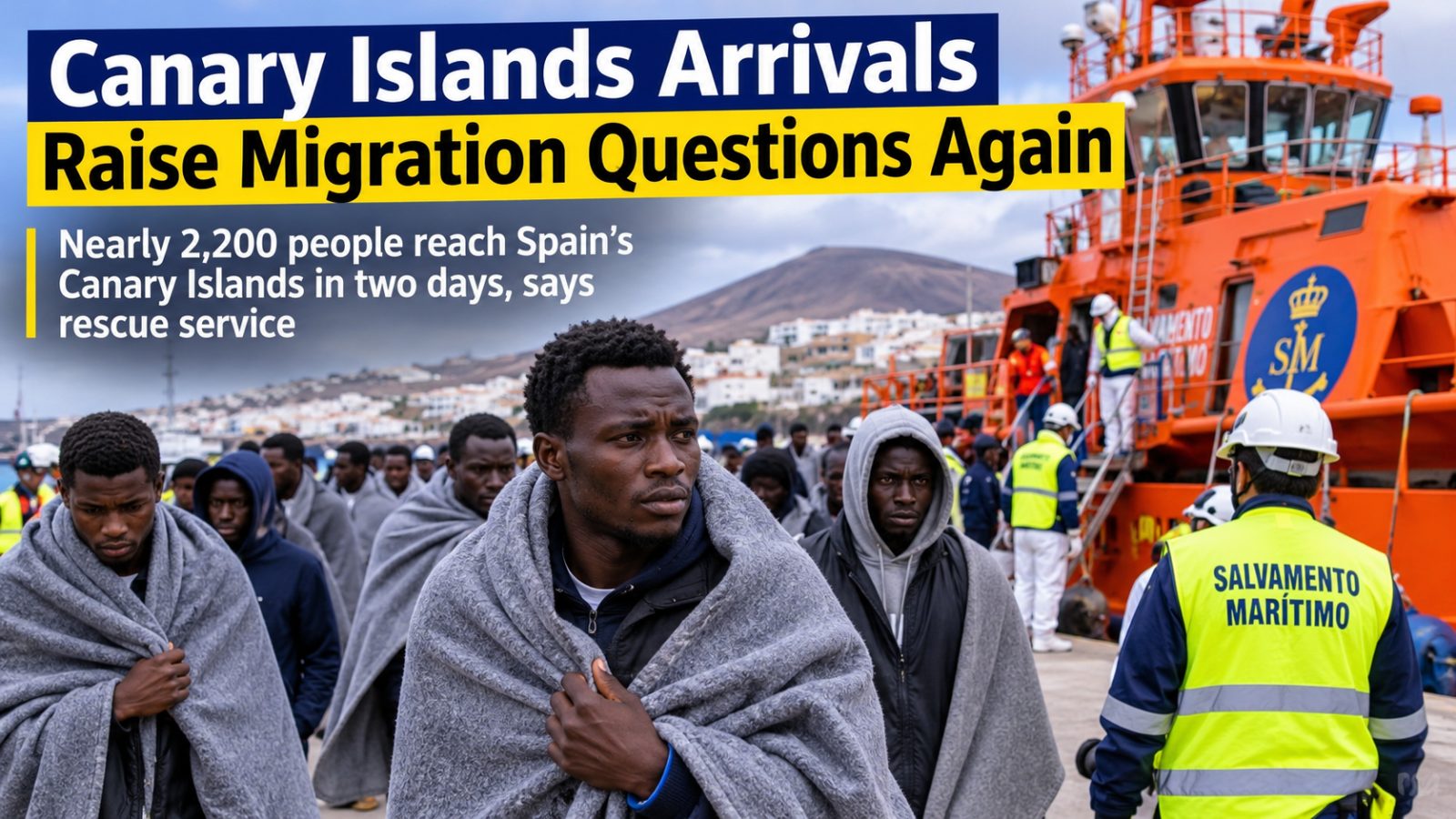
Fresh arrivals in Spain’s Canary Islands have renewed attention on a dangerous migration route linking West Africa to Europe. Nearly 2,200 people reached the archipelago by boat over two days, according to Spain’s maritime rescue service, in figures reported by Africanews on November 16.
The service said it assisted 1,324 people aboard 14 boats, most of whom arrived on El Hierro. The new arrivals followed another operation on November 15, when 1,488 people were rescued from 14 boats in one day. That was the highest total recorded on the route since November 2020, according to Reuters. Many rescued people came from Senegal, The Gambia and Guinea-Conakry. The figures show how quickly arrivals can rise, putting pressure on reception centres and emergency services.
Why the Atlantic route continues
For many people, the journey is driven by unemployment, poverty, insecurity and limited opportunities at home. Some hope to find work, education or greater stability in Europe. Others face family responsibilities or difficult conditions in their communities.
The route crosses the Atlantic from parts of West and Northwest Africa, including Mauritania, Senegal and The Gambia. Although the Canary Islands lie off Africa’s northwest coast, some departures begin much farther south. Increased patrols and tighter border controls can push boats towards distant departure points, making the crossing longer.
The human cost behind the numbers
The journey is dangerous. Migrants may travel in overcrowded, poorly equipped boats that remain at sea for days. Rough weather, strong currents, engine failure, dehydration and limited food or medical care can turn the crossing into an emergency. Some boats never reach land, leaving families without news of relatives.
The International Organization for Migration reported that during the first half of 2026, 59 boats failed to reach the Canary Islands, with 168 people reported dead or missing along the route. The agency has warned that longer journeys increase the dangers.
A response beyond rescue
Arrivals underline the need for more than emergency rescue operations. Governments and humanitarian organisations must provide safe reception, medical assistance and protection for people arriving on the islands, while also addressing the conditions that drive people to leave.
Migration is not simply a story of arrival figures. Behind every number is a person making a decision, with few choices. Cooperation between African and European governments, safer legal pathways and investment in communities could help reduce the need for dangerous journeys across the Atlantic.
Sources
Version 1.0. 54gist stories are edited before publication and updated as facts change. Spotted an error? Tell our editors.