##**Cairo film festival opens under tough regional mood**
The lights went up in Cairo this week, even as the region around it feels heavy. The 47th Cairo International Film Festival opened on Wednesday at the Cairo Opera House, bringing filmmakers, actors and industry figures f…
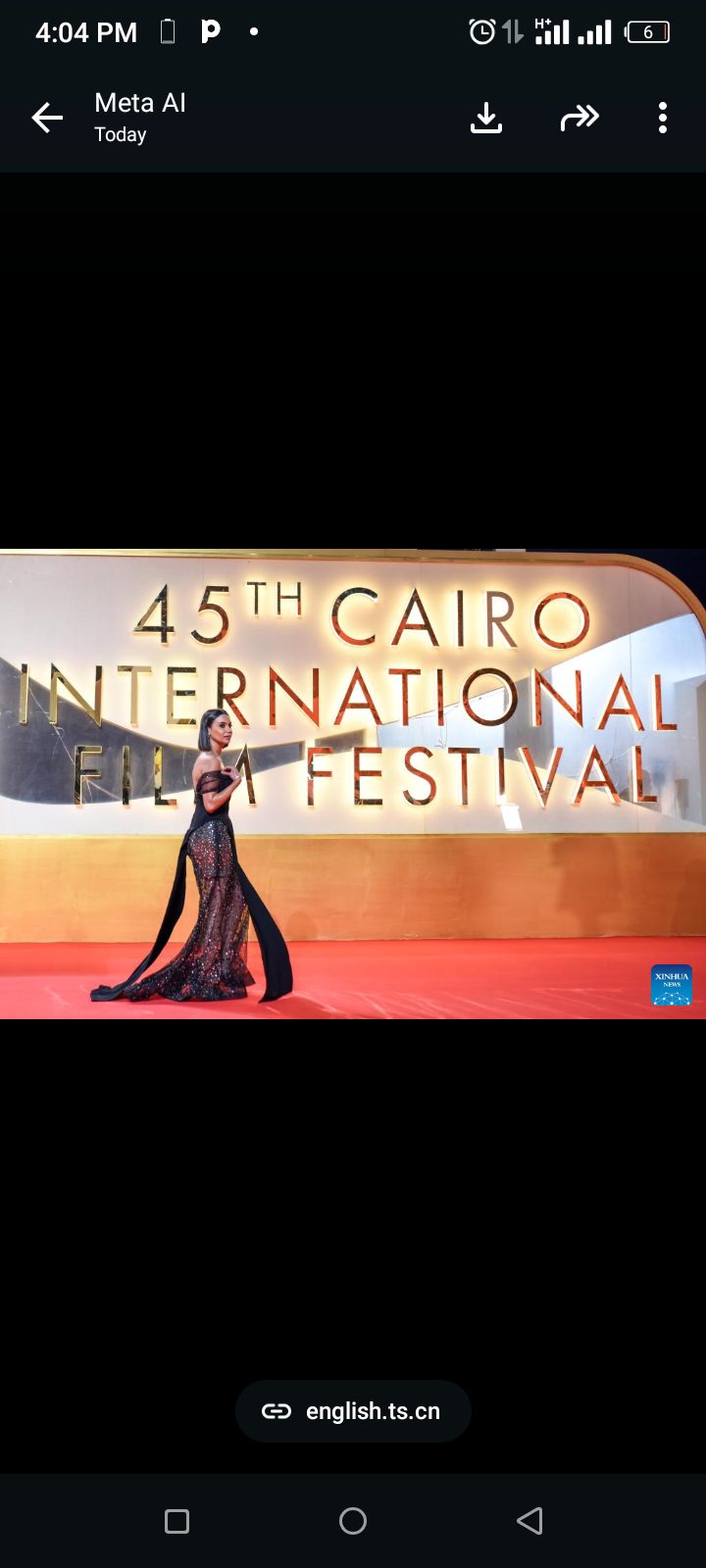
##The lights went up in Cairo this week, even as the region around it feels heavy.
The 47th Cairo International Film Festival* opened on Wednesday at the *Cairo Opera House, bringing filmmakers, actors and industry figures from around the world back to the Egyptian capital.
The festival runs until 20 November.
It is the 47th edition, but it marks 50 years since the festival was founded in 1976.
That anniversary should have made this a purely celebratory year. Instead, it has become a quiet, thoughtful one.
What the festival is about this year
-145 films from 64 countries
- 17 world premieres
- 87 Middle East and North Africa premieres*
- 12 films in the international competition, competing for the Golden Pyramid Award
- Opening film: I Play Rocky, directed by Peter Farrelly**
The choice of opening film is deliberate.
I Play Rocky tells the story of a young Sylvester Stallone writing the screenplay for Rocky and fighting to play the lead role himself. The original Rocky was released in 1976 — the same year the Cairo festival was founded.
It is a story about persistence. About refusing to give up a dream. About believing in a work when no one else does.
That theme runs through this year's festival.
Festival president Hussein Fahmy has framed this edition around something bigger than premieres. He wants younger Egyptians to rediscover their country's cinematic heritage, and he wants Cairo to stand alongside the world's major film festivals — not just as a host, but as a keeper of memory.
A documentary screened at the opening revisited five decades of the festival — its stars, its honours, its moments. It was a reminder that Egyptian cinema has survived wars, economic crises, and political change before.
This year also honoured:
- Medhat El-Adl — screenwriter, poet and producer — with the Golden Pyramid for lifetime achievement
- Matteo Garrone and Abderrahmane Sissako — with *Golden Pyramid Honorary Awards for Lifetime Achievement
- Saeed Shimi — cinematographer — also honoured
There is also a notable presence of Qatari-backed films and projects, including documentaries nominated for Best Documentary Film, such as Magma and The Day of Wrath: Tales from Tripolis.
Why the mood around it feels different
Africanews reported the opening with a line that captures the whole week:
The festival is taking place under the shadow of the Middle East war.
That shadow is not abstract. Filmmakers at the festival are talking openly about:
- Rising production costs
- Declining audience purchasing power
- Censorship as a major challenge for the regional film industry
- The difficulty of getting audiences back into cinemas when daily life feels uncertain
The war has affected economic activity, consumer spending, and the ability of audiences to access cinema across the region.
So the red carpet looks the same — gowns, tuxedos, flashing cameras, sponsor backdrops at the Cairo Opera House. But the conversations behind it are different.
Less about glamour. More about survival.
Can a film still find an audience? Can a young director still get funding? Can a story still be told honestly?
That is the mood. Not despair. But seriousness. A sense that cinema now has to justify itself — not as escape, but as witness.
Why big film festivals matter for African cinema
It would be easy to ask: why hold a festival at a time like this?
Because this is exactly when festivals matter most.
- They give African and Arab films a stage they do not get elsewhere
- They create premieres that travel — a film that premieres in Cairo can be bought, screened, and discussed in Berlin, Cannes, Toronto, and Lagos
- They connect filmmakers to funding — through markets like the Cairo Film Connection, where projects in post-production meet producers and distributors
- They preserve heritage — as Fahmy has stressed, a festival is not only about new films, it is about remembering old ones
- They give young audiences a reason to care — to see themselves on screen, in their own language, in their own stories
Cairo is one of the oldest and most prestigious film festivals in Africa and the Arab world. Founded in ”1976, it is FIAPF-accredited* — one of the few festivals in the region with that international standing.
When Cairo shows a film, the world pays attention. When Cairo honours a filmmaker, that honour travels.
For African cinema, that matters because distribution is still the hardest problem. Many excellent African films are made, but never seen. Festivals are often the only bridge between a director in Cairo, Dakar, Lagos, or Marrakech and an audience beyond their own country.
And in a tough regional moment, that bridge becomes even more important. Cinema becomes a place where people can sit in the dark together, breathe together, and remember that they are not alone in what they are feeling.
A quiet opening, a lasting purpose
The 47th Cairo International Film Festival did not open with noise.
It opened with memory. With an anniversary. With a story about a young man who refused to let go of his script.
In a region weighed down by war and economic pressure, that feels like the right note.
The lights are on in Cairo until 20 November. The films are screening. The conversations are happening.
And for ten days, at least, cinema is doing what it has always done best — holding space for stories when the world outside feels too heavy to hold them.
Source: Africanews — Cairo Film Festival opens as Middle East war weighs on cinema
Sources
Version 1.0. 54gist stories are edited before publication and updated as facts change. Spotted an error? Tell our editors.